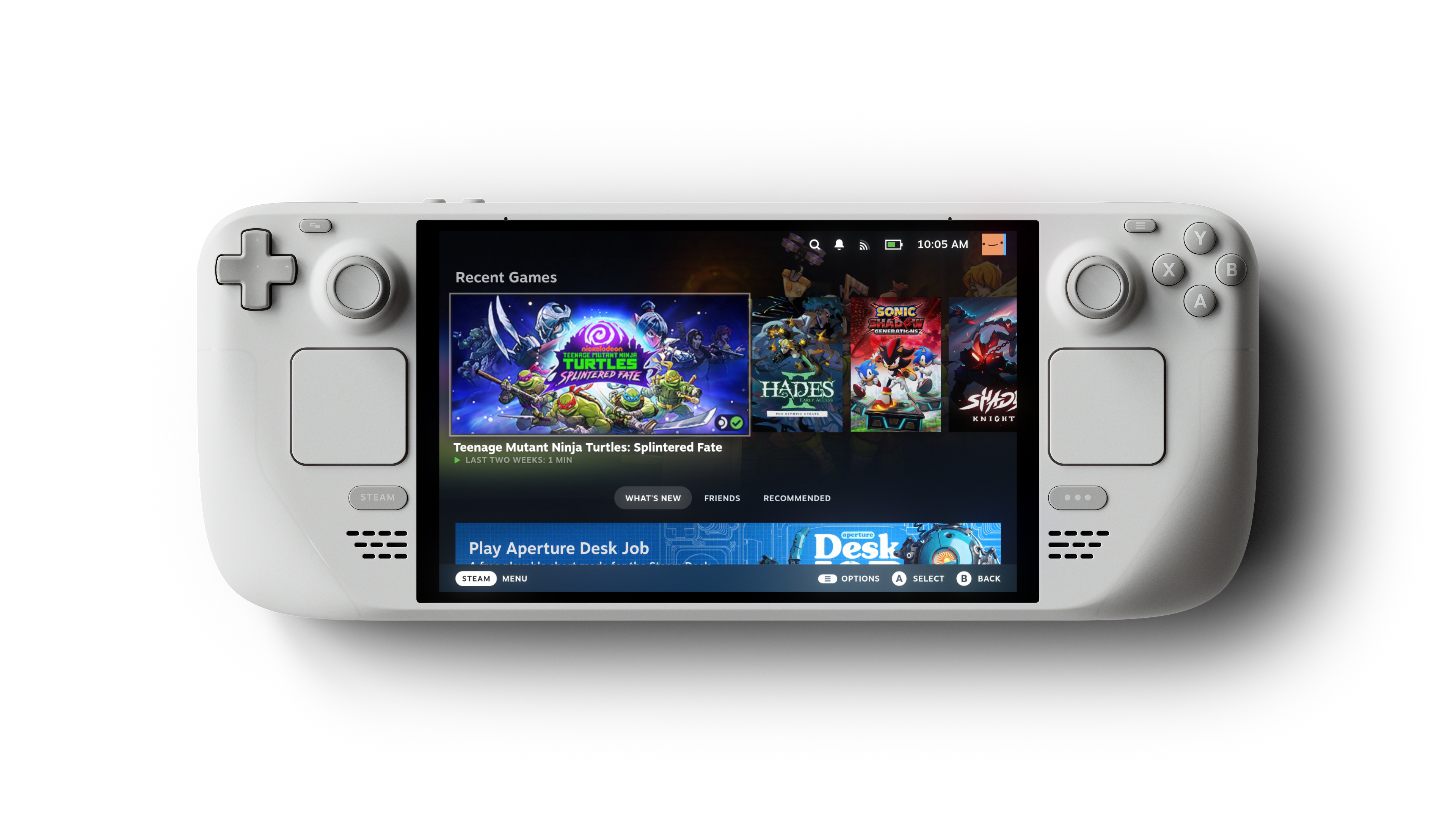
The new Steam Deck OLED has hit the ground running and has so far had positive reviews. The new OLED version has an increased display size increasing from 7 inch to 7.4 inch without increased the size of the of the Steam Deck itself. It has a 90Hz refresh rate which the original model didn’t have. This is not a new Steam Deck 2 Valve has made clear that a full new Steam Deck 2 won’t be planned for a few years at least. You could think of this as a refresh of the original Steam Deck with increased screen size and better refresh rates. It now has HDR and increased brightness up to 1000nits and a wider range of colour gamut, the colour saturation in HDR is quite impressive.
The only thing missing is VRR (Variable Refresh Rate). The new screen is sleeker and makes room for more battery space behind it. The battery is a 50Whr battery and last 50% longer than the original Steam Deck battery. The Steam Deck is 30g lighter than the original, and doesn’t seem much but if you’re holding it in your hands for long periods of time, then it’s a big difference.
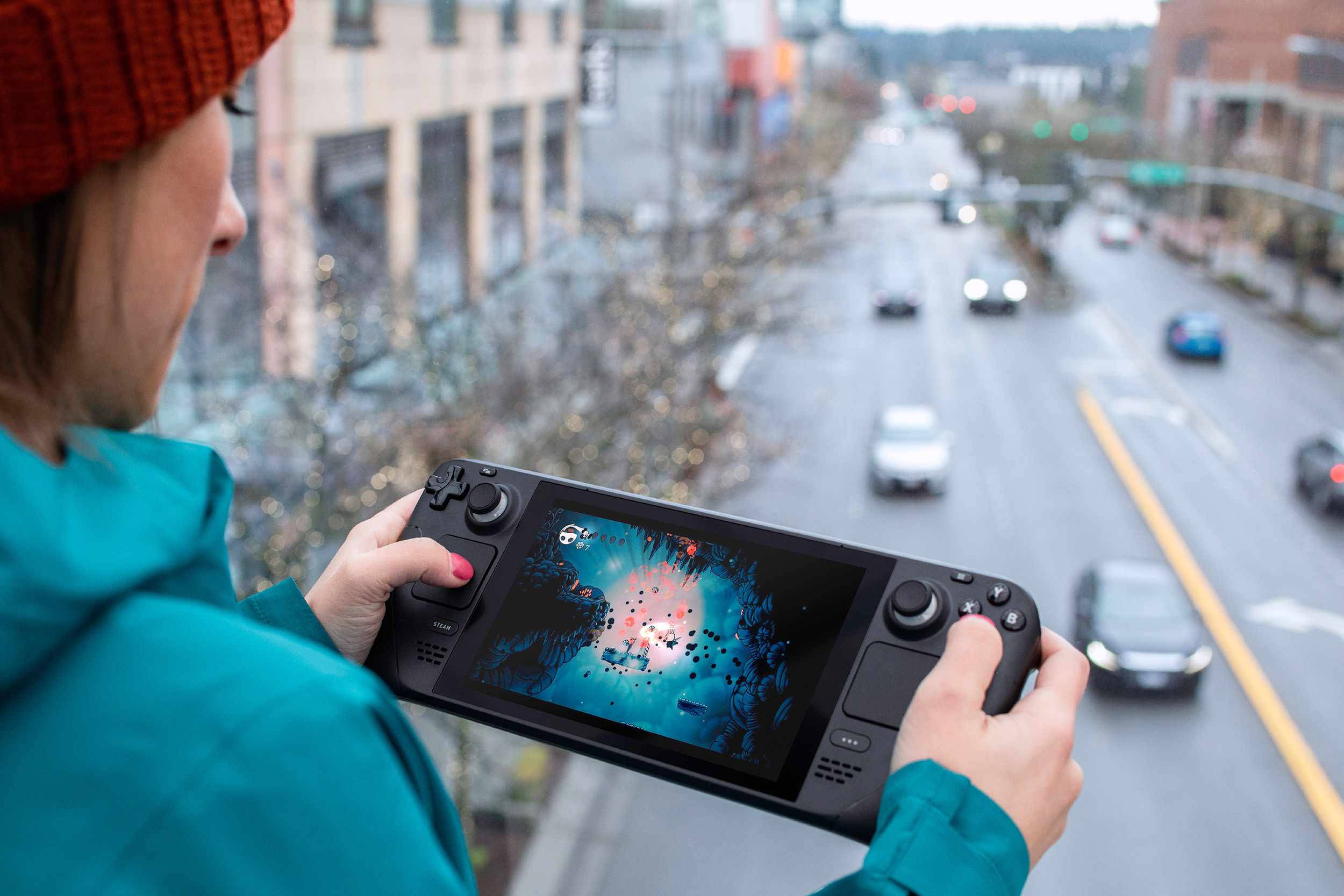
The Steam Deck OLED now supports WIFI 6 for faster downloading times. The haptics, trackpads and touchscreen have all been improved although when I used it, I didn’t notice much difference. Although they’re small improvements, it makes the new Steam Deck OLED a much better experience. It does seem better when using the on-screen keyboard and hitting them buttons. Even though it’s a big chunky monster of a handheld, it does feel good in your hands.Some high demanding games like God of War looks great on its 7.4-inch screen, with sharp visuals and punchy colours. Valve have hit the nail on the head with new OLED screen and its small improvements here and there. There are some compatibility issues with Steam O/S and getting around them and installing Windows 11 to solve these issues presented its own set of problems and can be frustrating. It’s annoying when you want to play a game for the first time, and constantly having to troubleshoot. When playing resource demanding games, you can expect to burn through all that battery charge quickly, if you tend to do some low-end gaming, then it will last a lot longer. So, lets take a look at the tech specs on the Steam Deck OLED:
| CPU | 6nm AMD APU CPU Zen 24c/8t,2.4-3.5GHz | |
|---|---|---|
| GPU | 8 RDNA 2CUs, 1.6GHz (1.6 TFlops FP32) APU power 4-15W | |
| RAM | 16GB LPDDR5 On-board RAM (6400 MT/squad 32-bit channels) | |
| Storage | 512GB NVMe SSD Steam Deck 1TB NVMe SSD both include high-speed microSD card slot |
|
| Display | Touch Screen 7.4" HDR OLED Resolution. 1280 x 800 x RGB, Brightness 1000 nits peak (HDR) 600 nits (SDR) Refresh rate up to 90Hz, Response time 0.1 ms Refresh rate 120Hz, Response Time 7ms, brightness 500nits |
|
| Battery | 50Whrs, charging speed up to 80% at 70 minutes, lasts 50% longer than the LCD Steam Deck | |
| Weight | 640g (1.41lbs) 5% lighter than the Steam Deck LCD | |
| Operating System | A Linux distribution customized by Valve, Steam Deck O/S (default) | |
| Sound | Stereo speakers with a embedded DSP for a more realistick experience Dual microphone array |